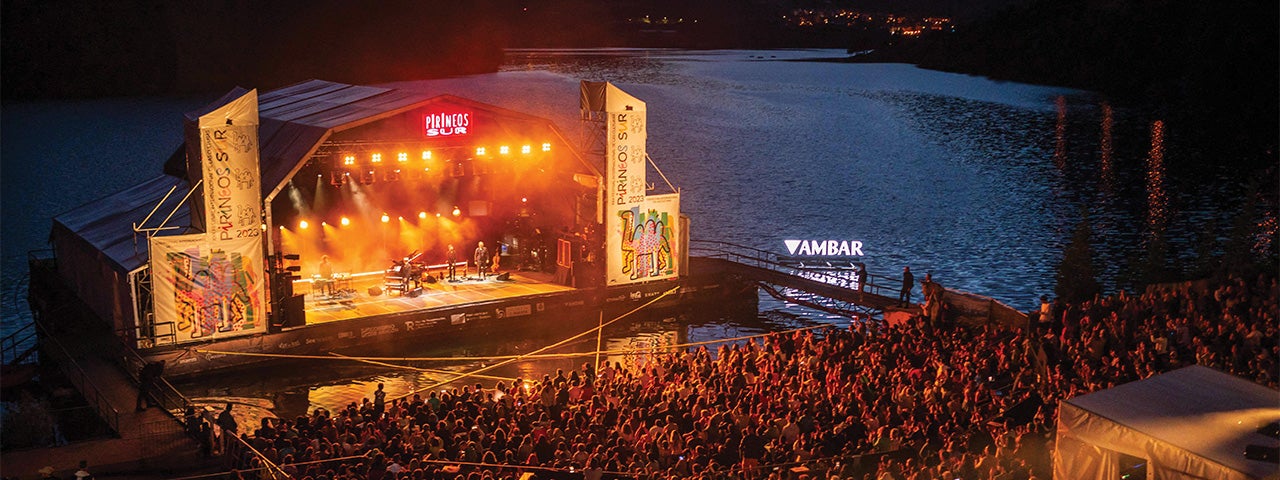
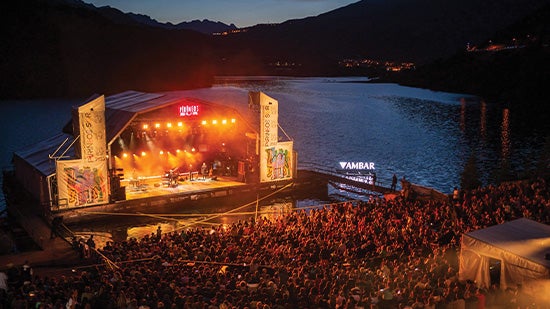
 We explore the restless creativity, family influences and enduring emotional power behind the Italian composer Ludovico Einaudi’s extraordinary global appeal.


Einaudi
We explore the restless creativity, family influences and enduring emotional power behind the Italian composer Ludovico Einaudi’s extraordinary global appeal.
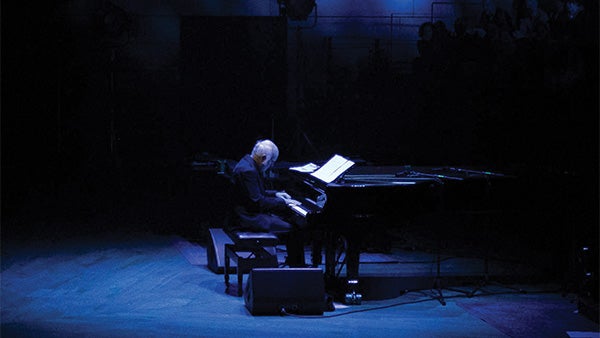
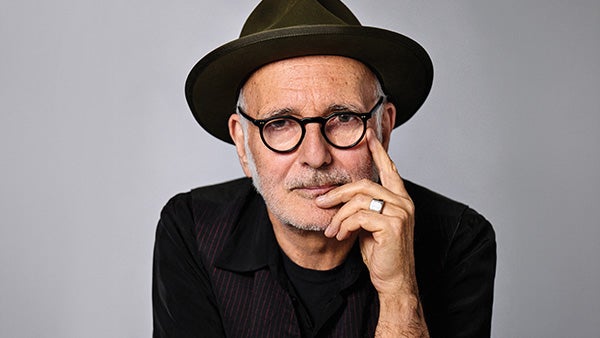
On a London midsummer night, the 20,000-capacity O2 Arena appears to be in the throes of a dream. The venue is sold out; the crowds are rapt, holding their phones aloft in a vast constellation of shimmering lights. Onstage, the central star is elegantly poised at his piano, wearing his signature fedora hat, performing an unmistakably emotive melody: I Giorni. The full house is fixated by the sounds of Italian composer, musician and soundtrack maestro Ludovico Einaudi.
I have watched Einaudi in concert several times over the years, each in a different setting: a historic West End theatre; the lavish Royal Albert Hall; most recently, at this hi-tech auditorium usually associated with pop superstars – and on every occasion, the live ambience has proved characteristically memorable. There is an intensely evocative power to Einaudi’s seemingly delicate compositions such as Experience; his multi-generational audience often seems breathlessly reverential. At other points, his chamber ensemble will erupt, summoning the heady, riotous energy of a rock concert. He is a man of few words on stage: genial and modestly delighted by the reaction.
CROSSING BOUNDARIES
At 70, Einaudi remains a restless artist; he seems to be perpetually on tour, playing to a fanbase that is genuinely international. How does he approach his distinctive live shows? “I try to create a special atmosphere – a space of wonder where you enter and never know exactly what will come next,” comes his reply. “It’s a special tool that allows me to take the audience into another world of magic, where time can stop or suddenly become electric.”
Einaudi is a cultural phenomenon on numerous levels. He is widely credited for the soaring popularity of solo piano and contemporary classical repertoire, alongside globally successful artists such as Max Richter, Yiruma, Hania Rani and Nils Frahm. He has built a prolific catalogue and is particularly celebrated for his far-ranging movie and TV scores, collaborating with directors such as Nanni Moretti (Aprile), Darren Aronofsky (Black Swan), Shane Meadows (This Is England), Chloe Zhao (Nomadland) and Florian Zeller (The Father) to name a few. The evocative immediacy and meditative beauty of Einaudi’s material present an antidote to traditionally elitist scenes and clearly connect with the young fans who pack out his shows. He is also a divisive figure among critics, some of whom have lambasted his crowdthrilling material as simplistic.
There is no denying that he has achieved blockbuster stats. The New York Times once deemed Einaudi “a classical artist for the YouTube age”. He is the most streamed living classical composer globally, amassing 5.5 billion streams on Spotify. In that sense, he is arguably bigger than Beethoven, though he would likely balk at this suggestion, just as he shrugs off modish marketing terms such as “classical crossover” (as he pointed out to The New York Times, this is hardly a new premise: “Stravinsky crossed boundaries – he was embracing folk music from Russia and popular music. Mozart was working in a theatre and writing songs for a company that was almost like a circus when he wrote The Magic Flute”).
While Einaudi’s most famous numbers feel instantly recognisable, his work has also been impressively far-ranging to date, from the taut early experimentalism of Time Out (originally composed for a live dance-theatre company and released as his debut album in 1988), through a collaboration with legendary West African kora player Ballaké Sissoko (Diario Mali, 2003), a 2016 climate awareness recording with Greenpeace (Elegy For The Arctic), and a record-breaking live residency for solo piano (six consecutive nights) at the Royal Albert Hall in 2025. I wonder what compels him to take on a particular project, and he explains: “I have to feel something special about it. [It has to be] something I haven’t already done. I listen to myself, and sometimes to the different points of view of my close collaborators, to have a wider range of options and approaches. Then I act very intuitively, by impulse.”
STYLE AND SUBSTANCE
Einaudi’s passion for music and creativity is evidently deep-rooted. He was born in Turin, with a fascinating family history; his paternal grandfather Luigi was President of Italy between 1948 and 1955, while his maternal grandfather Waldo Aldrovandi was an opera conductor and musician who fled the Fascist regime during the Second World War and relocated to Australia (where Einaudi remains in touch with his extended family). Einaudi’s father founded a prominent Italian publishing house, working with authors including Italo Calvino and Primo Levi. Einaudi also describes his mother as a formative musical figure in his life.
“I started listening to music with my mother playing Chopin, Schumann and Bach on the piano, as well as records by The Beatles, The Rolling Stones, Jimi Hendrix, Cream and Pink Floyd,” he says. “[My upbringing] gave me the fundamental tools to see and listen to the world around me. The main education comes naturally from the family you grow up in.
“My mother was very delicate and sensitive; she had a very intense inner stream of emotions that she expressed through music, while my father was more of a sophisticated aesthete, more engaged in art, design and nature. I think I was lucky enough to absorb some of those qualities from both of them.”
He remains culturally engaged, as he enthuses about contemporary artists. “Today the world has become much broader and I listen to many different artists, from St. Vincent to Coldplay, Théotime Langlois de Swarte playing Vivaldi, to Connan Mockasin. I’m open and curious, always searching for something authentic.”
As a young musician, Einaudi’s technical skills and creative adventures were further encouraged by his training at the prestigious Conservatorio di Milano and his studying orchestration with the avantgarde pioneer Luciano Berio. Einaudi has often spoken of the influence of Berio’s limitless vision, encompassing experimental techniques but also international, jazz and populist styles alongside non-musical inspirations such as literature and nature. His 2012 work The Elements was dedicated to Berio (Einaudi described this homage in an interview with Steinway: “It was based on the idea of elements of philosophy, science, geometry, art – and I think incorporates the idea of transcribing one world into another and trying to open your world to other perspectives”).
Through spanning the realms of high culture and mainstream appeal, Einaudi himself has been described as a “rule-breaker”; what does he make of this status? “To be creative you have to invent your own rules each time, exploring new boundaries,” he says. “If not, you become predictable – and that means you’re dead. The hardest part is refreshing your artistic vision and approach every time, without losing your identity and spontaneity.”
He is also unafraid of expressing a sentimental streak, and this is arguably part of what makes his music so intensely relatable, creating a sense of sanctuary or reverie on a mass scale. His acclaimed 2025 album The Summer Portraits reflected on family memories, including idyllic vacations spent in Tuscany (the familial creative bond has continued with the recent ‘remix’ version of the album featuring his musician son Leo, Einaudi vs Einaudi). I ask Einaudi how these different environments have impacted his musical approach. “It’s the cultural identity you absorb that shapes your life and creates what becomes a model of multiple references.This has to do with both the natural and cultural landscape. As an artist, this becomes your personal palette, where you select and blend your colours.”
Does Einaudi feel that instrumental music and movie scores can say more than words? “Instrumental music leaves more room for mystery, for the unknown,” he says. “It doesn’t fill all the gaps, and in those gaps there’s extra space for imagination.”
MUSIC WITH MEANING
Einaudi’s ongoing international tour dates extend into 2027; it’s testimony to the worldwide demand for his music, but it must also be a gruelling schedule.
“It’s hard to be away from my family for a long time,” he admits. “After 10 or 15 days, I start to feel a bit lost in a nowhere-land of airports and hotels. But the concerts and the audience’s response every night rekindle my sense of purpose and give me a boost.”
He always carries his camera and a notebook with him (“to hold on to something from this crazy life”). How does he unwind when he’s on the road for such extended periods? “I love playing table tennis, but I have to be careful with my arms – sometimes I get too competitive and hurt my tendons!” he says. “I also do Pilates, which is less fun, but at least it doesn’t hurt.”
When it comes to his achievements, wherever he is in the world, il maestro remains firmly grounded at heart: “It’s fantastic to have arrived where I am now, while staying honest and true to myself and to what I create,” says Einaudi. “It’s an incredible experience to have such a great audience all around the world, to feel that pure and loving connection with my fans. It’s an act of love that I feel is returned – it’s a moment of communion. And that, to me, is the deepest meaning of making music. It means more than any prize or award.”
Ludovico Einaudi’s international tour continues through to March 2027. Visit ludovicoeinaudi.com
Image Credit: Alamy